Plant-based chocolate is gaining prominence in a market that is constantly growing and experiencing a boom in the launch of sustainable, plant-based products. This growth is driven by new consumer preferences, as virtually all innovation within this category focuses on the changing needs of shoppers.
What trends are we seeing in the chocolate market? What innovation opportunities stand out? Let's answer these two big questions.
5 Trends in Plant-Based, Sustainable, and Indulgent Chocolate
1. Plant-based and vegan chocolate: the top selling points
Plant-based diets have gained popularity in recent years. Consumers are seeking to reduce their consumption of animal-based ingredients, which is driving demand for more plant-based foods, including plant-based chocolate. In these types of products, brands generally replace milk with plant-based alternatives, such as nut butters.
Vegan chocolate is also appealing to consumers who, for various reasons, do not consume dairy products. However, consumers must understand the added value it offers in order to accept the higher price compared to milk chocolate.
It is worth noting that more than half of the vegan or plant-based chocolate launches presented in 2021 were available in tablet format, making it the most recurrent vegan format.
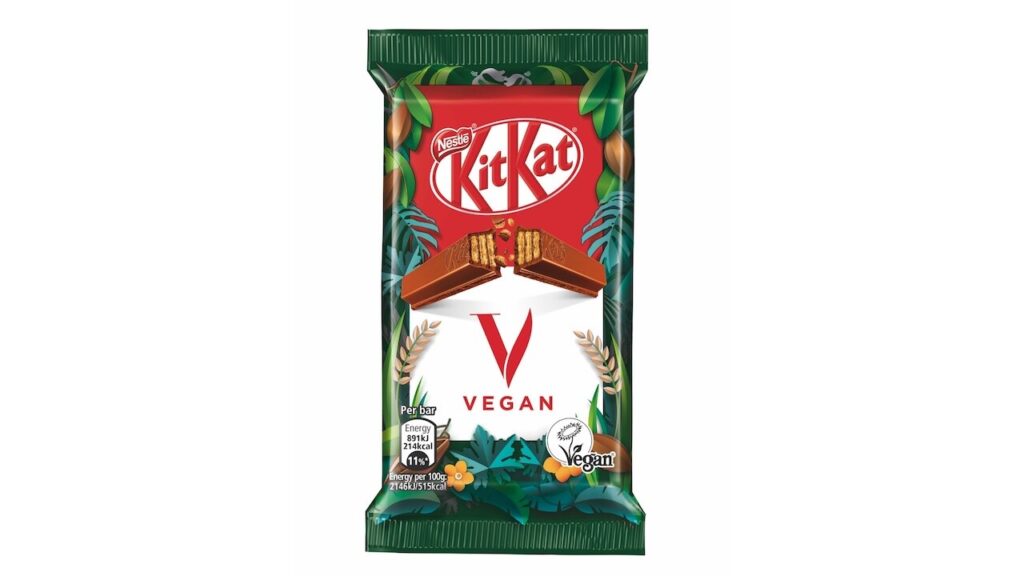
Nestlé launches its famous tablet with a rice-based formula as a substitute for cow's milk.
Source: MINTEL GNPD (© Nestlé image)
2. Sustainability is no longer an option
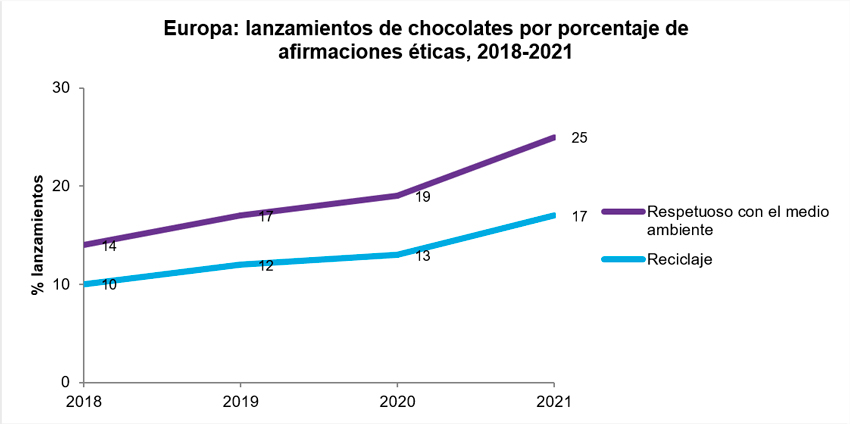
Consumers are increasingly aware of the damage caused by plastic waste to the planet and are changing their behavior to prevent pollution. They value food and beverage products that claim to use sustainable packaging.
Chocolate brands are exploring more sustainable packaging options, such as those with biodegradable or compostable qualities, as well as redesigning packaging to reduce the amount of plastic.
On the other hand, the environmental impact of cocoa production remains a controversial issue as it is believed to be one of the main causes of deforestation. Consumers expect brands to communicate their ethical and sustainable qualities and demonstrate their commitment to people and the environment, and would even be willing to pay more.
3. Indulgence with a touch of health
As a comfort food that offers emotional enjoyment, chocolate has benefited from the pandemic. However, consumers are increasingly aware of the importance of following a healthy diet, so many chocolate brands have looked beyond mere indulgence and are innovating around options that balance pleasure with enhanced characteristics.
They increase the "no, reduced, low" claims for sugars or carbohydrates and emphasize the presence of healthy fats (such as coconut oil), suitable for the ketogenic or keto diet.
4. Indulgence through multisensory experiences
Consumers continue to be eager to escape social constraints and seek new experiences that drive them toward indulgent products that stimulate their senses. And they are willing to pay more for it.
Confectionery brands use taste, texture and time of use to stimulate the senses, seeking moments of pleasure and escapism.
The most common textures are crunchy and smooth. Thicker textures are often used in products with nuts or cookie pieces.
When it comes to occasion, they focus on the importance of sharing a special moment. With so many restrictions on celebrations by COVID-19, chocolate brands innovate around gifts for holidays such as Valentine's Day, Christmas or Halloween.
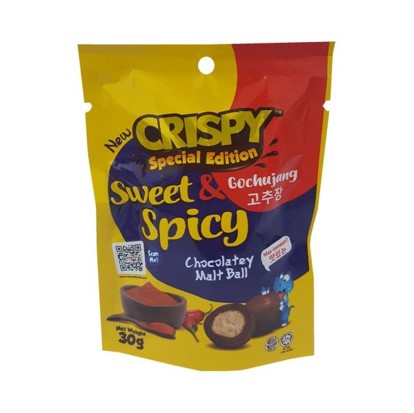
Sweet and spicy flavor, this product is limited edition and the chocolate balls are created from malt and keep sweet chili powder inside.
Source: MINTEL GNPD (© image by Crispy)
5. Preference for local flavors
Provenance-related claims have become more pronounced since the pandemic as consumers are encouraged to support local brands to revive their local economy affected by COVID-19.
Chocolate brands have adapted, formulating with locally sourced ingredients and regional flavors, as well as celebrating local chocolate-making traditions.
3 opportunities for innovation in the chocolate sector
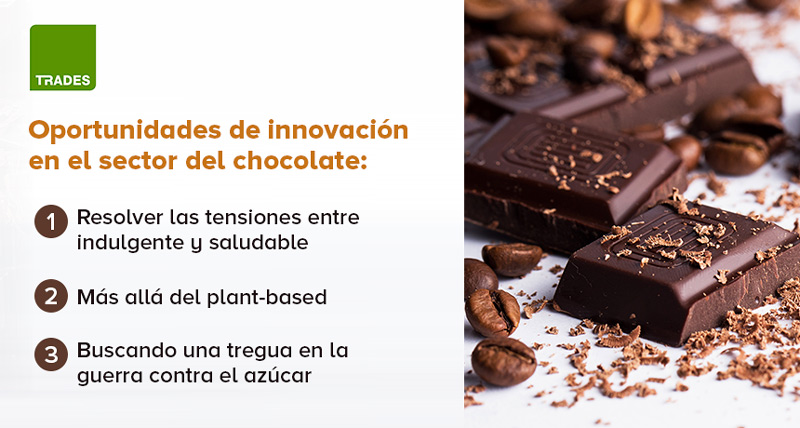
Now that we know the 5 major trends in the sector, let's see which three innovation opportunities the MINTEL experts highlight.
Balancing Indulgence and Health
Consumers' desire for foods with a functional purpose remains strong, but they have not given up their weakness for indulgence. The challenge for confectionery is to find a balance between the two.
Beyond Plant-Based Chocolate
Vegan diets continue to gain popularity, and plant-based chocolate has become an increasingly relevant option. To keep consumers engaged and stand out in an increasingly competitive niche, brands need to offer unique selling points that go beyond the product’s plant-based origin.
New Approaches to Reducing Sugar Intake
The war on sugar has been going on longer than expected, and the pandemic has accelerated the movement toward low-sugar or sugar-free claims in a variety of products. Confectionery is still trying to win over consumers whose sugar-reduced lifestyles eschew sweets.