
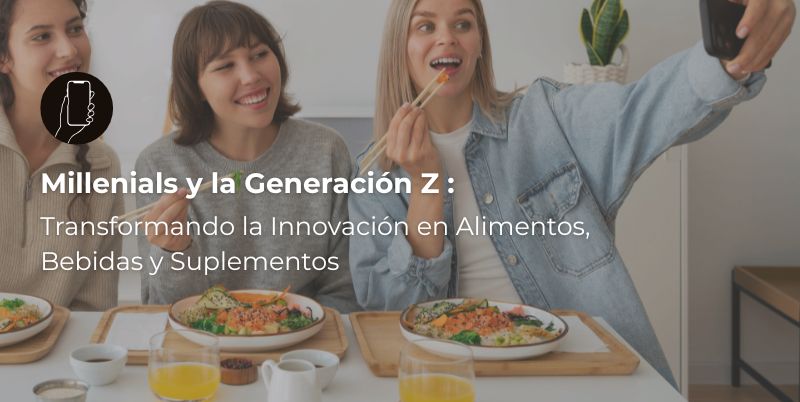
The consumer packaged goods (CPG) market is undergoing unprecedented structural change. Millennials and Generation Z are no longer an emerging audience: they are the main drivers of growth in the industry, redefining what it means to innovate, communicate and create value in the food, beverage and supplement space.
Beyond demographics, their influence responds to a different mindset. They are informed, discerning and value-driven consumers. Every purchase decision reflects a purpose: personal well-being, sustainability or authenticity. Understanding this logic is now key to directing innovation towards what really connects with new market expectations.
Transparency and "Clean Label": the new currency of confidence
Transparency has become the first criterion of choice.
90% of young consumers avoid artificial or hard-to-identify ingredients, and the concept of "clean label" is no longer a plus but a competitive standard.
This forces brands to go beyond marketing. Reformulating products, revising packaging and simplifying ingredient lists are strategic moves today. Honesty in composition and communication translates into trust, and trust has become the main differentiator.
Personalized Health and Preventive Wellness: from fashion to everyday science.
Health is no longer a generic goal. Millennials and Gen Z approach it from personalization and prevention.
Supplements (VMS) are integrated into daily routines, driven by a holistic approach to wellness that combines nutrition, performance and beauty.
Millennial households are adopting vitamins and supplements at twice the average rate, and new areas of interest - stress management, reproductive health, skin and hair care - are driving the convergence between nutrition and cosmetics.
From this comes the "beauty from within" trend, which opens up new opportunities for products that combine functionality and sensory experience: collagen drinks, magnesium shots or snacks with natural adaptogens.
Artificial Intelligence: the new healthcare and product development advisor
Artificial intelligence is already part of the wellness ecosystem.
Nearly one in five Generation Z youth use AI assistants to receive nutritional recommendations or discover new products.
For companies, this technology represents much more than a communication channel: it is a tool to design and adapt products in real time, anticipate trends and personalize experiences.
AI enables R&D and marketing teams to move from observation to predictive learning, optimizing formulations, packaging and messages based on real consumer habits.
Nutritional Density and Functionality: Protein as a Pillar of Innovation
In this new era of conscious consumption, products must nourish more with less.
Nutritional density becomes the benchmark of value. Protein and fiber are the big drivers of this trend, leading innovation in multiple categories.
More than 50% of young consumers follow high-protein diets, and fiber, once associated with functional or dietary, is being reinvented as a holistic wellness ingredient.
Brands that balance nutritional value, convenience and sensory pleasure are gaining space in the shopping basket.
On the other hand, the search for products that are not only delicious, but also responsible with the planet is growing. The launch of organic chocolates responds to this demand, integrating sustainable practices throughout the production chain, from cocoa cultivation to packaging.
La Cocina Moderna: a global laboratory of innovation
Contemporary cuisine has become a space for cultural exploration.
Millennials and Gen Z are looking for gastronomic experiences that blend health, authenticity and discovery. Formerly exotic ingredients - such as Korean gochujang or Chinese chili crisp - are becoming part of everyday recipes, while new categories such as "smart" fats and functional fermented foods are redefining flavor codes.
This phenomenon turns culinary innovation into a differentiation tool for brands: connecting with consumers through pleasure, without sacrificing functionality.
R&D and Marketing Opportunities: Innovating with Purpose
The challenge for CPG companies is not just to launch new products, but to understand why they are relevant.
Innovation and marketing teams must work in an integrated way, combining science, data and purpose.
The future will belong to companies capable of:
- Fusing global inspiration with local accessibility.
- Balance indulgence and functionality in every development.
- Integrate AI as a tool to personalize and optimize.
- Adopt transparency and sustainability as brand pillars.
It's not about following a trend, but about understanding a new way of thinking about consumption. Millennials and Generation Z are not looking for products; they are looking for brands that reflect their identity.
And in this new scenario, purposeful innovation is the real driver of growth.

Protein-enriched foods
Challenges of the food industry !