The trends for 2023 are presented in the form of 3 macro trends of which we can break down to a total of 9 within them.
2022 has been a year of change in which, although we have been leaving behind the hardest part of the pandemic, we have been surprised by an unprecedented economic, political and raw material instability.
Therefore, tranquility will be a key point to connect with the consumer, nervous and constantly adapting to the changes that occur.
Brands can support in many ways, translated into the trends we will see below, trying to diversify and innovate in their products, while offering reassurance and answers to global challenges.
Below, we explain in detail the three global consumer trends in food and beverages for this new year and add 5 more trends that we believe we can't miss. Let's get started!
1.THE VALUE OF THE PRODUCT
Consumers are looking to find tangible benefits for the money and time they spend. Although the cost of living continues to rise, price will not be the only factor that motivates people, but also the clarity, nutrition and versatility of the products they consume.
These will be the 3 drivers to achieve this:
1.1 MINIMALIST MESSAGE
Clear and simple messages will be critical to connect with consumers, fatigued by the current situation of instability and overwhelming information.
Consumers are wary of packaging with too many health claims, as they feel that too much information makes it difficult to make a choice. They prefer, however, those where only a few benefits are mentioned.
Messages focus on value aspects, health benefits and natural ingredients.
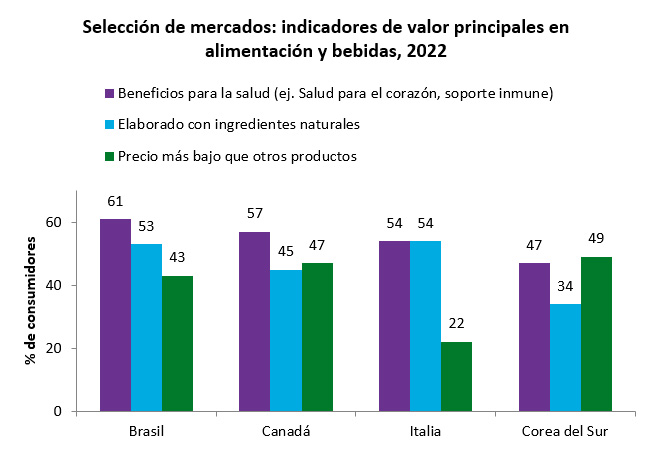
Source: Dynata/Mintel; Kantar Profiles/Mintel. August 2022
Although inflation in 2022 in Brazil, Canada, Italy and South Korea was among the highest, consumers in Brazil and Italy believe that health benefits and natural ingredients are more important factors than price.
TREND FORECAST
What type of information and where it is shared will be critical to gaining consumer trust.
- Brands will need to find a more appropriate place than the packaging to explain more about their products. The origin, history and uses will be valuable information for consumers, but it should be located in places where they can choose to see it. Social media, blogs and other marketing tools will be a good option.
- As household budgets recover, companies will have the opportunity to replace economic messages with more compelling ones such as product versatility or environmental or ethical claims.
- To build consumer confidence, it is still very important to base the benefits mentioned on scientific research, third-party certifications or official logos that make reference to them.
1.2 KEEPING YOUR STOMACH AND POCKET FULL
Messages shared with the consumer should be simple and highlight both the economic benefit and ingredients that are nutritious and satiate our appetite.
Focusing on natural, known and satiating ingredients will be a winning formula, including carbohydrates for energy or protein for muscle health and other health benefits.
Brands that offer nutrition at affordable prices will stand out to shoppers for their value for money.
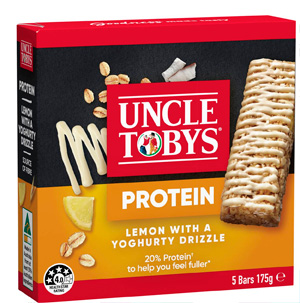
© Uncle Tobys Protein (Australia)
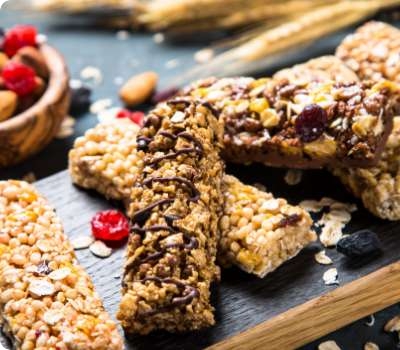
Lemon protein muesli bars with a yogurt drizzle
They are said to contain 20% protein to help you feel fuller. The bars are made with oats, soy protein chips and yogurt.
TREND FORECAST
What do we expect to come along with this trend?
- One way to reach out to consumers will be to offer advice and educate them on how to make healthier choices at affordable prices. For example, how to prepare economical, nutritious and hearty meals.
- Highlighting the value of nutrient-dense foods can position certain manufacturers. For example, by highlighting ingredients such as nuts, vegetables or whole grains, we can communicate that in addition to being high in fiber or protein, they also provide energy.
- Ultraprocessed foods will become increasingly unpopular. In line with this, European health agencies are including aspects of the NOVA classification in national dietary guidelines.
1.3 ADAPTABLE KITCHEN
Frequent cooking at home remains one of the consequences of the pandemic. However, it is becoming increasingly difficult as recent events mean that the consumer must constantly adapt to the best way to prepare his recipe.
Providing consumers with the knowledge they need to make food choices amidst economic fluctuations and product availability will be key to gaining their trust.
How to achieve it?
- Brands have the opportunity to help home cooks gain expertise and flexibility in their recipes by teaching them ways to optimize processes and flavors, for example, through indications on cooking legumes or marinating pieces of meat to enhance their flavor.
- They can also instill confidence in consumers by reassuring them that they can achieve good recipes even if their level of experience is not very high. And once achieved, suggest new ways for them to experiment in the kitchen. Whether with new formats (e.g., waffle sandwiches), new ingredients that give color or texture (e.g., a blue butterfly pea tea)....
TREND FORECAST
What do we expect to happen as a result of this trend?
- Many consumers will integrate the use of energy-efficient cooking equipment such as microwave ovens, pressure cookers or air fryers into their recipe book. This will create a need for new recipes and advice that can come from brands, whether in the preparation of new or "old" dishes. Brands can take advantage of the current interest in traditionally made foods, such as pickles and jerky, to bring these methods back to the present along with their benefits.
- After helping consumers learn to be flexible with the ingredients they use in their cooking, brands can apply that flexibility to how they source and communicate their ingredients. They can make it clear that they are flexible by selecting the best ingredient at any given time, as long as this substitution is clearly communicated to the consumer.
- Companies could also position flexible formulations positively by using familiar terms such as limited edition or limited batch to suggest that newer blends are short-lived releases that consumers won't want to miss.
2. EXPERIENCES
In the midst of constant uncertainty and anxiety, consumers will be looking for experimental foods and beverages with which to achieve pleasure, fun and adventure.
These will be the 3 drivers to achieve this:
2.1. WHIMS WITHOUT GUILT
Often, pleasurable foods and beverages are advertised with naughty, guilty or frivolous connotations. Brands will need to rethink this approach and offer themselves as a necessity in difficult times, rather than being seen as guilty self-indulgences. They have an opportunity to incorporate indulgent foods and beverages as an essential within the growing realm of self-care and stress reduction.
How can brands get consumers to see them as necessary for personal care?
- Combining food and drinks with relaxing activities. For example, after a bath.
- Complement beauty and personal care formulations (BPC) with edible options. Food, beverage and BPC brands can collaborate to extend the multisensory experience of a personal care routine into the realm of taste.
- Incorporate "self-care" activities into the tasks involved in food and beverage preparation. For example, Barilla and Spotify collaborate to create timed playlists that make boiling pasta more fun. This way, the consumer enjoys and makes the most of the time it takes to prepare the dish.
Brands can enhance the consumer experience in the home, which many consumers will continue to do as a way to save money as the cost of living rises.
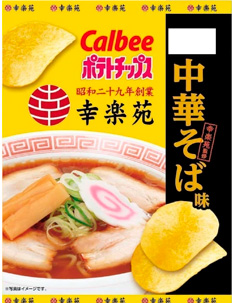
© Calbee Kourakuen Noodles (Japan)
- Bringing the flavors of the restaurant to the home
Brands can recreate the flavor of a restaurant or co-brand with a restaurant for premium positioning.
Calbee Kourakuen Chinese noodle-flavored potato chips bring the flavors of the Kourakuen noodle store, which has been open since 1954, to potato chips.
Salt & Straw Perfume (United States)
- Scent adds a new sensory element
Ice cream company Salt & Straw launched a collection of three edible culinary scents designed to enhance the ice cream tasting experience.
The scent can also be promoted in water, soft drinks, baked goods and prepared foods.
While many brands compete to give consumers what they want more quickly and conveniently, there is a need to consume products that delay the moment of gratification. Thirty-nine percent of French adults agree that food and drink are more satisfying when you have to wait for them. Multi-textural layering or hidden flavors can be a good tool to achieve this.
"Horological" snacks are also a way to achieve this as they allow consumers to choose the start time and duration of a taste sensation. In Japan, Minute Mint candies take a specific time to melt in your mouth, for example 1 minute.
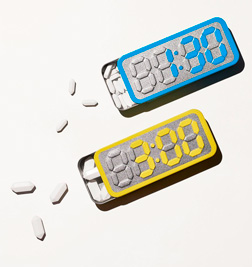
© Minute Mint (Japan)
TREND FORECAST
What does the future hold?
- Multisensory food and beverage innovations could come hand in hand with virtual reality. Virtual realms such as the metaverse will even offer people pleasure with sensory simulation tools. Researchers at Meiji University have developed a wearable "lickable screen" device that, when inserted into the mouth, can recreate all the taste sensations associated with food.
- In some markets, taboos around sex will continue to dissolve as adults seek to make healthy, empowered choices about their sex lives. Food and beverage products that promise aphrodisiac benefits may resonate with both younger adults and the aging population. U.S. functional beverage manufacturer Free Rain has launched a sparkling water containing maca, a Peruvian herb used to "increase libido." Products that suggest sexual connotations in a humorous way will also gain popularity.
2.2 STAYING "ALERT
Nutrition will be a valuable tool for improving and caring for cognitive health. Thus, consumers will look for foods that influence cognitive ability, control stress levels and optimize brain function.
On the other hand, foods will also be viewed as a way to help optimize mental performance at work, at home and at play.
Brands will promote ingredients familiar to consumers that enhance these aspects of cognitive health and mental productivity. In the future, there will be an increasing need to demonstrate these benefits through corroborating studies.
One of the ingredients advertised as productivity boosters is caffeine.
- We may see an increase in products with a low caffeine content. Consumers value coffee's mental energy boost, but express concern about its impact on health. 66% of Italian coffee drinkers agree that drinking too much is bad for health .Coffee with less caffeine can communicate "sustained energy" without excess caffeine.
- The exploration of new sources of caffeine at moderate levels is also a trend. For example, in the Yaupon holly plant, native to the USA, which contains 30% less caffeine than coffee and can flourish in extreme climates.
- Finally, we detected low-caffeine products blended with other ingredients. Brands can create low-caffeine blends, such as Mission Yerba Mate Tea (UK), which has claims of focus and clarity.
TREND FORECAST
And what will we see next?
- Vitality and gut health will drive greater use of plant-based foods for cognitive health. Fruits and vegetables will be advertised as sources of increased energy and mood boosters
Looking ahead, more research will be needed before emerging cognitive ingredients can become mainstream and brands will need to substantiate all these claims through scientific studies.
- Terms such as adaptogen and nootropic will become increasingly common . Adaptogens are botanical ingredients, such as ashwagandha, holy basil and schisandra, that can help the body regain balance and cope with physical or mental stress. Nootropics, such as L-theanine and GABA, are linked to increased brain power, concentration and alertness.
2.3 SHELTER IN SPACE
As the Earth becomes more chaotic, space will become a source of optimism, innovation and connection.
As a marketing concept, space will become a more tangible and relatable place. It will symbolize hope amidst intensifying crises on Earth.
The repercussions for food and drink will manifest in:
- New space-inspired technologies, such as water purification.
- To meet the particular consumption needs of humans in space, including people on research missions and space tourists.
- Create terrestrial innovations from space travel findings, such as lunar minerals or zero-gravity dining.
The undiscovered novelty of outer space has a particularly immaculate allure for Generation Z, who are disillusioned with the world as it is. They will see space as a symbol of hope, positivity and global cooperation.
Space is an intriguing point of inspiration, as these 2022 releases demonstrate.
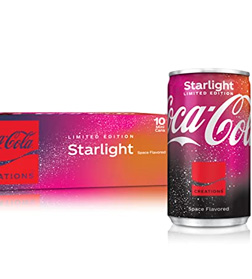
Coca-Cola Starlight
Coca-Cola's Starlight space-flavored beverage was inspired by "the magic and mystery of the cosmos." The company hopes its Creations line of innovative, limited-edition flavored beverages will renew Coca-Cola's appeal to Generation Z.
TREND FORECAST
What does the future hold?
The new space race will make space missions make headlines and leave an impression on consumers.
- New space technologies and discoveries will give food and beverage brands a wider variety of space-inspired themes to draw inspiration from.
- Astronauts will need new food solutions. However, these advances may also prove useful on Earth.
- New products to be consumed in space
- Nutritionally suitable products for astronauts
- New water solutions. NASA recently upgraded the technology that distills urine into drinking water on its International Space Station.
As the Earth faces freshwater shortages, recycling water in space has implications for drought-stricken regions.
- It will be a spiritual refuge for many consumers, especially the new generations who need to fill that void.
- Space tourism will appeal to a wider audience.
- Children will be familiar with space technology.
3. ENVIRONMENT
How consumers feel connected to the external environment will largely determine their consumption trends by 2023 by linking them to the pillars of sustainability, ethics, localism and equality.
These will be the 3 drivers to achieve this:
3.1 THE VALUE OF WATER
More respectful and resourceful use of water will become a priority for consumers and businesses.
As water concerns are localized, companies will need to be transparent about their responsible use within certain communities. For example, Coca-Cola guarantees to return the total amount of water it uses to the local ecosystem in Colombia.
Also, a more sustainable approach to freshwater use will drive the acceptance of seawater and recycled water as ingredients. Improvements in filtration technology and declining costs expand the potential for widespread use of desalinated water. According to Mintel's 2022 The Future of Water, Sports and Energy Drinks report , within the next five years, desalinated water will be flavored and remineralized as global demand for packaged water intensifies.
On the other hand, consumers will gain a new appreciation for concentrates and dehydrated/lyophilized formats because they are water-efficient, as well as versatile and customizable.
Concentrates also have the added benefit of being sustainable because they reduce the carbon footprint in transportation and have a longer shelf life, which reduces food waste.
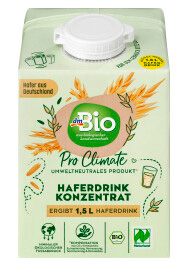
DM Bio Pro Climate - concentrated oat drink (Slovakia)
The optimization of transport is sought through smaller containers. It can prepare up to 1.5 liters.
3.2 RESISTANCE TO EXTREME MEDIA
Consumers will be looking for products that help their bodies withstand varying temperature extremes, and industry companies will need to develop product innovations that help deal with the harsh effects of extreme weather and disastrous weather events.
Food and beverage innovations will also be called upon to provide user-friendly nutrition during weather-related disasters and find "comfort" during weather emergencies.
3.3 ENERGY SAVINGS
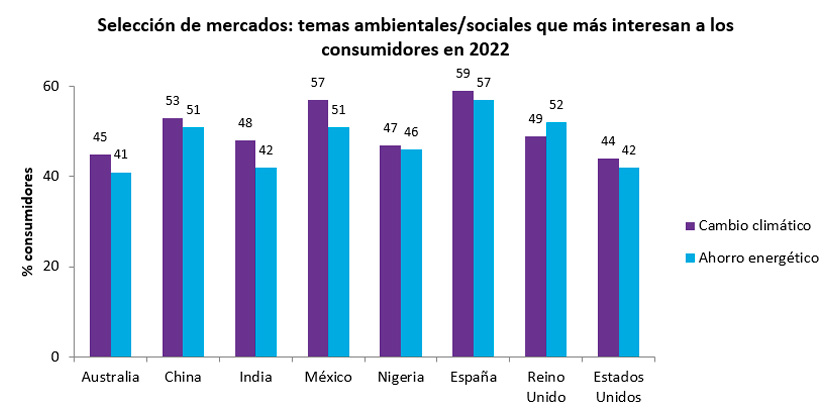
Source: Dynata/Mintel; KuRunData/Mintel; Offerwise/Mintel; Kantar Profiles/Mintel, August 2022.
On the other hand, high energy costs are creating the need to look for new ways to save energy, so brands can share how their products require less energy to store or prepare.
In this context, we will see more claims about microwave ovens and deep fryer instructions as these appliances save more energy compared to the oven.
Genuine demand for energy savings will now drive appreciation of the benefits of having energy-efficient food and beverages on hand during extreme weather conditions.
MACRO TREND FORECAST
And what does the future hold with this trend?
- Protect consumers' skin from UV rays. Stronger UV rays will create demand for functional foods and beverages with skin health benefits. Companies can formulate with collagen, lycopene or ingredients that maintain skin health after sweating caused by high temperatures or humidity.
- Leverage traditions. Companies, especially in Asia, can rely on ingredients that claim to contain cooling or warming properties according to Ayurveda or Traditional Chinese Medicine.
- Anticipate supply chain challenges. Cold chain storage could be at risk in some markets due to rising energy costs or energy reduction policies. In addition to strengthening cold chain infrastructure, companies can ensure product safety by making formats more stable.
BONUS: 5 FOOD AND BEVERAGE TRENDS YOU SHOULD KNOW ABOUT
Value, experience and environment are the 3 key macro trends for this new year.
However, we have detected 5 more consumer trends that we believe are relevant to share with you:
- Affordable nutrition: to meet the demand for high nutritional value at the right price, innovation is needed to maximize efficiency and yields. There has been 86% year-on-year growth in food and beverage launches with an indication of product cost (product launches with terms such as "affordable" as part of the name, description or claims).
- Growing the future: New agricultural systems are improving quality and sustainability, resulting in consumer interest in food sourcing. 69% of global consumers say "I prefer products that mention the benefits of their sourcing/cultivation method on the packaging".
- Fast quality: Culinary creativity flourished during the pandemic and now must come with greater convenience to meet busier routines. 2 out of 3 consumers say "I am looking for simple and convenient ways to ensure my daily nutrient intake."
- Positively imperfect: Consumers appreciate openness about the complexities of sustainability, as they don't expect brands to be 100% perfect. 62% of consumers say they feel more engaged in a brand's sustainability journey when the brand communicates the challenges they face in product, such as committing to by-product reuse or ucpycling.
- "Revenge spending": small pleasures have a bigger effect as spending on luxury products comes under pressure, offering opportunities to improve brand perception. 58% of consumers globally confess that they would love to try modern/innovative versions of a well-known food or beverage brand.